

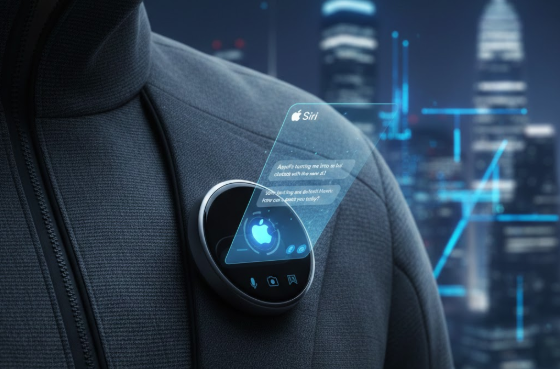
Apple is taking its AI strategy to a whole new level. According to recent reports, Apple is working on a wearable AI Pin that can clip onto clothing, while also transforming Siri into a true chatbot. Together, these two moves could push Apple into a much more serious position in the generative AI race.
Reports from The Information and Bloomberg, including insights from Mark Gurman, suggest that Apple’s vision is not limited to software alone. Instead, the company is betting on a mix of ambient hardware and smarter software, aiming to make AI feel more natural and always available through a discreet wearable device.
Inside Apple’s AI Pin Concept and Potential Features
The rumored AI Pin is described as an AirTag-like Pin that is small, thin, and circular. It is said to include multiple cameras and microphones to capture the wearer’s surroundings. A small speaker would provide quick responses, while wireless charging, similar to the Apple Watch, would make daily use easier.
Sources claim Apple is considering producing millions of units at launch, signaling confidence in a category that others have struggled to define. Humane’s AI Pin generated early hype but faced reliability issues and limited real-world usefulness.
Apple’s biggest advantage could be deep system integration. A device tied into Ultra Wideband, the Find My network, and Apple’s vast developer ecosystem could feel less like a standalone gadget and more like an extension of the iPhone. At the same time, OpenAI is developing its own consumer device with former Apple design chief Jony Ive, heating up competition in the ambient AI space.
Siri’s Chatbot Turn with Gemini-Powered Enhancements
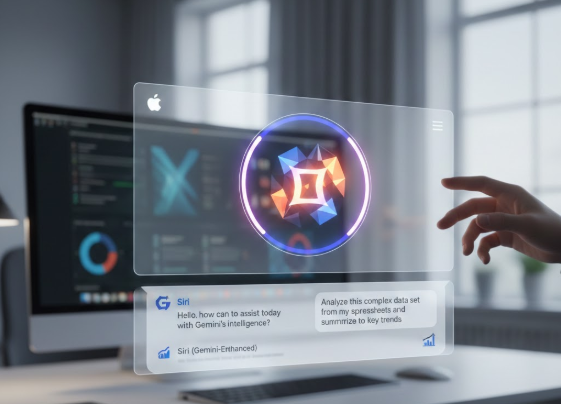
The most dramatic change is coming to Siri itself. According to Bloomberg, Apple has struck a deal with Google to use Gemini, training a custom version to make Siri a modern conversational chatbot. This upgrade would allow Siri to handle multi-turn conversations, pull real-time information from the web, and draft messages and documents.
The new Siri could also generate images, analyze files, and tap into personal data like calendars and email, with user permission, to complete tasks more autonomously. Internally codenamed Campos, the rollout is expected to happen alongside major OS releases across iPhone, iPad, and Mac.
Privacy will be a defining issue. Apple says sensitive requests should run on-device whenever possible, while heavier workloads would go to its own cloud infrastructure. With Gemini in the mix, Apple will need to show clearly how user data stays compartmentalized and how permissions are enforced.
Why It Matters for Apple’s AI and Wearable Strategy
Consumer expectations for digital assistants have changed rapidly. Services like ChatGPT now serve millions of users weekly, and Google has aggressively pushed Gemini across its products. In this environment, Apple’s opportunity is to make AI feel invisible and effortless.
If Siri can reliably handle tasks like booking, summarizing, planning, and content creation without friction, it could significantly upgrade the iPhone experience. But the risks are real. Wearable cameras raise social and regulatory concerns. Battery life and heat could limit small devices. And LLMs still hallucinate at times.
Apple’s brand is built on polish and trust. The company will have to prove that a more capable Siri is also more accurate, accountable, and safe, not just more talkative.
What to Watch Next at Apple’s Developer Conference and Beyond
All eyes are now on Apple’s developer conference. Look for signs such as new APIs, deeper system hooks, and support for multimodal input that could preview Siri’s new brain.
For the AI Pin, watch hiring trends, patent filings, and supply chain chatter around miniature imaging modules or UWB accessories. If these reports hold, Apple may be preparing not just to catch up in AI, but to define a future where ambient AI becomes a daily habit, always ready before you even ask.
