

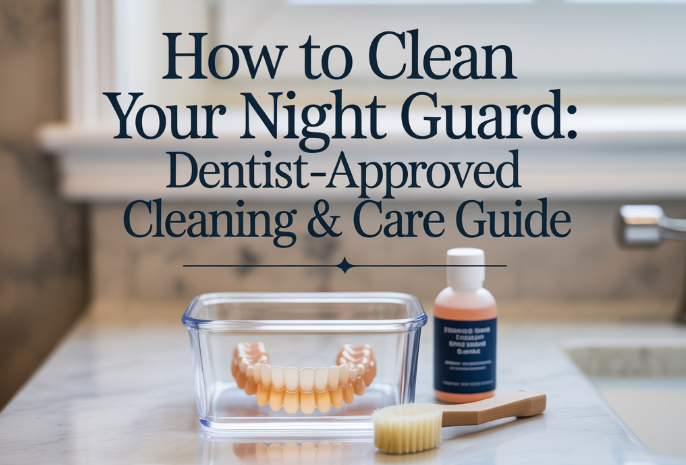
Your night guard works hard every night to protect your teeth from grinding and clenching, but it also collects bacteria, plaque, and odor-causing germs. That’s why learning how to clean night guard properly is essential for good oral health. Without regular night guard cleaning, you risk infections, bad breath, and even damage to your guard. The process isn’t complicated—it just requires consistency and the right methods.
Using gentle, mild soap night guard cleaning, and avoiding harsh chemicals keeps your device clear and safe. A clean guard lasts longer, feels fresher, and protects your smile. Here’s the complete, dentist-approved guide to mouthguard maintenance for a healthier, fresher mouth.
Why Cleaning Your Night Guard Matters
Cleaning your guard every day keeps bacteria, mold, and plaque away. A dirty guard can cause mouth infections, sore gums, and an unpleasant smell. Regular mouthguard maintenance not only protects your teeth but also helps you sleep peacefully without irritation.
Studies show that people who clean night guard daily are less likely to suffer from dental inflammation. When left uncleaned, your guard collects microbes overnight, increasing your risk of gum disease. In short, clean it often to extend life of night guard and keep your mouth healthy.
Daily Cleaning Routine (Quick & Easy Method)
Every morning, remove your guard and rinse it immediately under cool or lukewarm water. Always rinse mouth guard after use to remove saliva and buildup. Avoid very hot water—it can melt or warp the plastic. Dentists strictly advise to avoid hot water mouth guard care, as it ruins its fit.
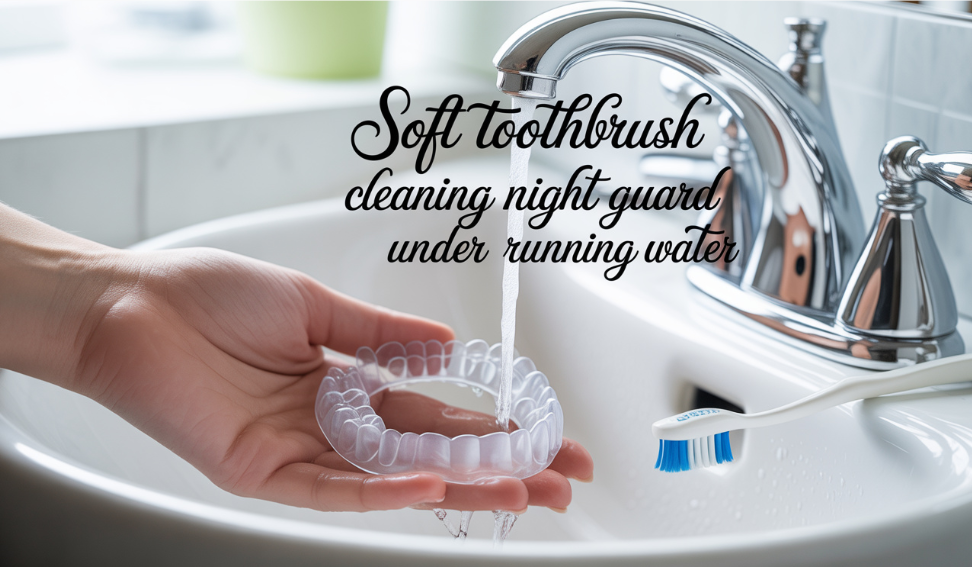
Next, use soft toothbrush cleaning with gentle strokes. Apply a drop of mild soap night guard cleaner or clear antibacterial soap. This removes bacteria safely without scratching the surface. Never use whitening toothpaste—it’s abrasive and can dull the finish. After brushing, air dry mouth guard on a clean towel for 30 minutes before storing it. This prevents moisture buildup that attracts germs.
Weekly Deep Cleaning Methods
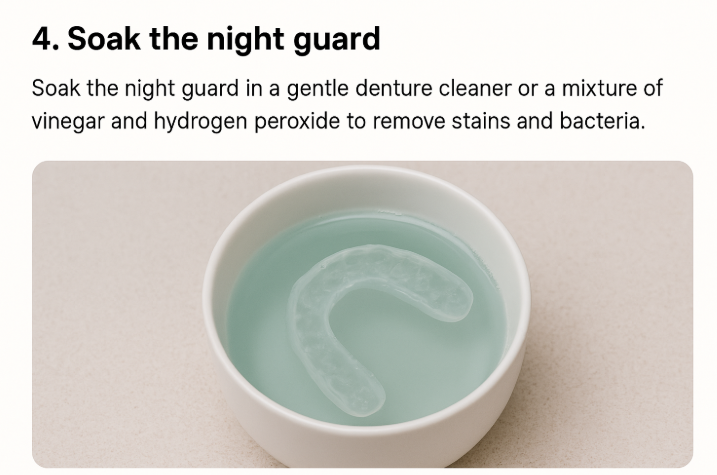
Weekly cleaning is just as vital as daily care. A weekly deep cleaning night guard removes residue that regular brushing misses. Once a week, try soaking it in a safe homemade cleaner. Use a soak mouth guard vinegar solution by mixing equal parts white vinegar and water. Let your guard sit for 30 minutes, then rinse thoroughly.
For stubborn stains or odors, you can soak in mouthwash or denture-cleaner tablets available at drugstores. These methods disinfect effectively without harming your mouthguard. Here’s a quick comparison table of the best options recommended by American dentists:
| Cleaning Method | Duration | Benefits |
| Vinegar + Water | 30 mins | Natural, removes odor |
| Hydrogen Peroxide | 10 mins | Kills bacteria fast |
| Denture-Cleaner Tablets | As directed | Deep cleansing & whitening |
These solutions are safe cleaning for custom night guard materials and maintain transparency over time.
How to Store Your Night Guard Properly
Once your guard is clean and dry, always store night guard in ventilated case. Air circulation helps stop bacteria from growing inside. Never seal it in a closed or damp container—it needs air to stay fresh. Proper storage plays a key role in mouthguard maintenance and odor prevention.
You should also clean mouth guard case regularly using mild soap and water at least once a week. This step ensures you don’t reintroduce germs every time you store it. Avoid sunlight or heat sources—they can warp the material permanently.
Common Cleaning Mistakes to Avoid
Many people damage their night guard without realizing it. One of the biggest errors is using abrasive toothpaste. Always avoid abrasive toothpaste for night guard, as it causes scratches that trap bacteria.
Another mistake is using boiling water, alcohol, or bleach. These harsh agents destroy the material. Forgetting to dry your guard completely before storage also encourages mold. Keep it clean, dry, and ventilated to prevent bacteria and odor in mouth guard that can ruin your oral hygiene.
When to Replace or Consult Your Dentist
Even with perfect care, guards don’t last forever. Learn when to replace night guard by checking for wear signs like cracks, yellowing, or bad odor. These are common signs of worn night guard (cracks, warping, odor) that show it’s time for a new one.
Dentists suggest replacements every 12–24 months, depending on your usage and grinding level. If your guard feels uncomfortable or loose, visit your dentist for adjustments or cleaning. They can provide ultrasonic deep cleaning services that restore freshness safely.
Dentist-Recommended Products for Cleaning
Professional cleaning products make the job easier and faster. American dentists often suggest trusted brands like Efferdent, Polident, and Smile Brilliant. These are gentle yet powerful enough for deep clean night guard maintenance.
You can buy them online from Amazon or at CVS, Walgreens, or Target. These options are alcohol-free and ideal for daily use. For sensitive users, choose non-flavored versions that don’t cause irritation. Regular use helps extend life of night guard and maintains clarity.
| Product Name | Type | Price Range | Use Frequency |
| Efferdent | Tablet | $5–$10 | Weekly |
| Polident | Tablet | $6–$12 | Weekly |
| Smile Brilliant Gel | Liquid | $10–$15 | Daily |
These are all dentist-recommended and safe for custom night guards.
Tips for Long-Lasting Night Guard Care
Your dental appliance cleaning routine should be consistent and simple. Rinse, brush, soak, and dry—it’s that easy. Remember to keep your case and guard clean and dry every single day. Treat your night guard like you would your toothbrush—essential and personal.
To make it last longer, combine cleaning with good oral hygiene. Brush your teeth before wearing the guard, and air dry mouth guard thoroughly each morning. These mouth guard hygiene tips will keep it clear, fresh, and functional for years.
Conclusion
Knowing how to clean your night guard the right way is key to oral health. A clean guard prevents bacteria, bad odor, and dental problems. With daily rinsing, weekly deep cleaning, and proper storage, you’ll protect both your guard and your smile.
By following these dentist-approved steps and using safe cleaning for custom night guard products, you’ll enjoy a comfortable, hygienic, and long-lasting appliance. Take care of your night guard—it’s not just a piece of plastic; it’s a vital part of your healthy sleep and dental care routine.
FAQ’s
What is the best way to clean a night guard?
The best way to clean a night guard is by gently brushing it with a soft toothbrush and mild soap, then rinsing and letting it air dry completely.
Should I clean my night guard every night?
Yes, you should clean night guard daily after each use to remove bacteria, saliva, and plaque buildup.
Can I boil my night guard to clean it?
No, never boil it. High heat can warp or damage the material—always avoid hot water mouth guard cleaning.
How to remove white buildup on mouth guard?
Soak it in a vinegar solution or denture-cleaner tablet once a week to dissolve calcium and residue.
What are the disadvantages of using a night mouth guard?
If poorly fitted or uncleaned, it can cause gum irritation, bad odor, or bacterial buildup over time.
