

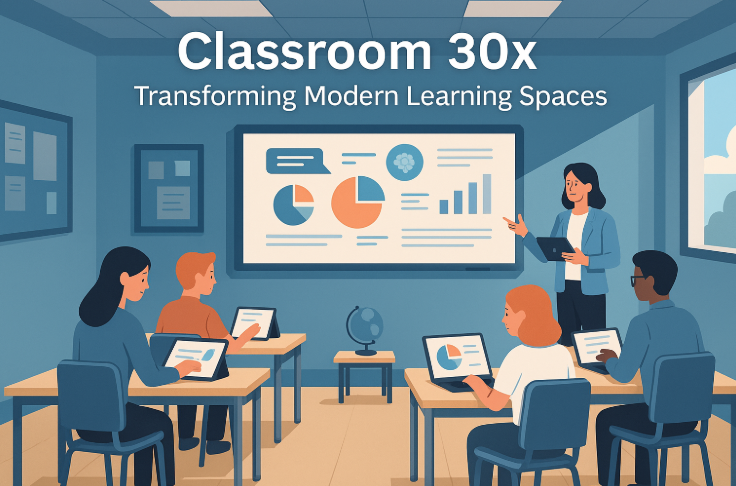
Education is evolving faster than ever before. Traditional classrooms filled with chalkboards and rows of desks are giving way to connected, data-driven environments that encourage creativity, collaboration, and critical thinking. At the center of this transformation stands Classroom 30x, a modern learning concept that redefines how students and educators interact in the digital age.
Classroom 30x isn’t just about adding more screens or faster Wi-Fi. It represents a complete ecosystem where technology enhances every aspect of the learning experience — from lesson delivery to personalized feedback. Designed for the post-pandemic world, Classroom 30x is where pedagogy meets innovation, preparing students not just to pass exams, but to thrive in an ever-changing future.
What Is Classroom 30x?
Classroom 30x refers to a new generation of learning environments that integrate physical and digital tools into one seamless system. It’s a hybrid model combining hardware, software, and design principles to support interactive learning across all age groups.
Unlike older “smart classrooms” that focused primarily on digital whiteboards or projectors, Classroom 30x takes a holistic approach. It emphasizes connectivity, adaptability, and inclusivity — ensuring that every learner, whether in-person or remote, can engage equally in the educational process.
The “30x” name symbolizes a leap forward — a classroom that’s 30 times more engaging, more connected, and more efficient than traditional setups.
Core Features of Classroom 30x
1. Immersive Digital Integration
At the heart of Classroom 30x are interconnected technologies like touch-enabled displays, smart boards, augmented reality (AR) interfaces, and virtual labs. These tools turn passive learning into an active, hands-on experience.
Teachers can integrate multimedia lessons, live simulations, and interactive polls that allow instant feedback and deeper comprehension.
2. Cloud-Based Collaboration
Every Classroom 30x operates on a unified cloud system. Students can access assignments, projects, and recorded sessions anytime, anywhere. Group projects are no longer limited by classroom walls — collaboration continues seamlessly online.
3. AI-Driven Personalization
Artificial intelligence plays a critical role in Classroom 30x. It tracks student performance, identifies learning gaps, and recommends tailored content to address specific weaknesses. This helps educators deliver personalized instruction without overwhelming workloads.
4. Sustainable and Flexible Design
Classroom 30x environments are built with sustainability in mind — featuring energy-efficient lighting, modular furniture, and smart climate control. Layouts are easily adaptable for lectures, group work, or hybrid teaching setups.
5. Enhanced Security and Data Protection
With increased connectivity comes greater responsibility. Classroom 30x integrates advanced cybersecurity frameworks, ensuring student data and online sessions remain private and secure.
The Technology Behind Classroom 30x
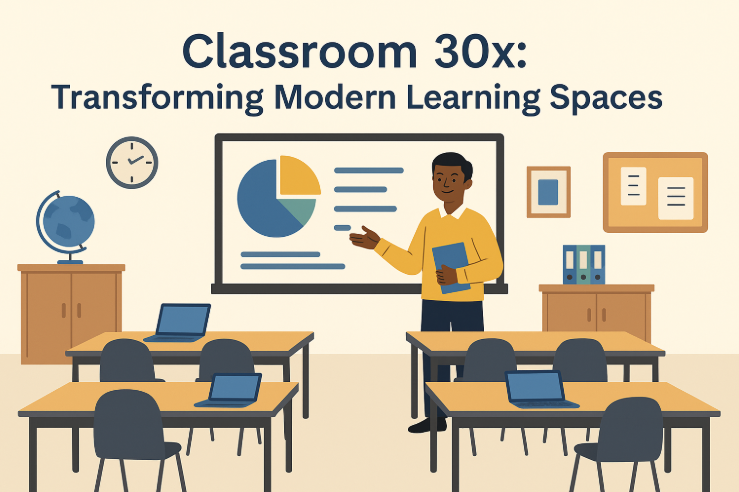
Classroom 30x relies on a combination of cutting-edge technologies that work together to create a frictionless learning experience:
- IoT (Internet of Things): Connects all devices — from whiteboards to tablets — ensuring synchronized operations.
- AI and Machine Learning: Provides predictive analytics for performance tracking.
- AR/VR Systems: Offer immersive experiences, from virtual field trips to lab simulations.
- 5G Connectivity: Enables real-time video, cloud computing, and remote collaboration.
- Learning Management Systems (LMS): Centralizes assignments, grading, and student engagement tools.
This technological blend transforms classrooms from static spaces into living digital ecosystems that evolve with each student’s needs.
Benefits for Students
- Engagement and Motivation: Interactive lessons hold attention better than traditional lectures.
- Accessibility: Materials are available online 24/7, making it easier for remote and differently-abled learners.
- Collaboration Skills: Group projects and digital teamwork mimic real-world professional environments.
- Critical Thinking: Exposure to AI tools and data interpretation encourages analytical learning.
- Confidence Building: Personalized feedback empowers students to track progress and take ownership of their learning journey.
Benefits for Educators
- Simplified Lesson Delivery: Teachers can create multimedia lessons quickly and share them instantly.
- Data-Driven Insights: AI analytics provide performance metrics that inform teaching strategies.
- Time Efficiency: Automation reduces administrative tasks such as grading and attendance.
- Professional Development: Continuous access to digital resources and peer collaboration networks.
- Adaptability: Teachers can seamlessly shift between in-person, hybrid, and online formats.
Impact on Modern Education
The introduction of Classroom 30x has already begun reshaping school and university systems worldwide. Institutions that adopt the model report higher student engagement, improved test performance, and lower dropout rates.
More importantly, it aligns education with the skills demanded by the 21st-century workforce — digital literacy, teamwork, problem-solving, and adaptability.
In the United States, several pilot programs integrating Classroom 30x technology have shown measurable success in improving STEM learning outcomes, especially in underserved regions.
Challenges and Considerations
While Classroom 30x is revolutionary, implementation is not without challenges.
- Cost of Infrastructure: Setting up connected devices and systems can be expensive for schools with limited funding.
- Training Requirements: Teachers need digital literacy training to maximize Classroom 30x’s potential.
- Digital Divide: Equal access to devices and internet connectivity remains a global challenge.
- Privacy Concerns: Handling student data securely is essential to maintain trust.
For long-term success, policymakers must prioritize inclusivity and provide funding, training, and security support alongside technological upgrades.
How Classroom 30x Promotes Equity in Learning
Classroom 30x isn’t just about technology — it’s about equal opportunity. By enabling remote participation, speech-to-text support, and real-time translation, it breaks barriers for learners with disabilities or language differences.
This inclusivity makes education accessible to more students than ever before, regardless of background or physical location.
The Future of Learning: Beyond Classroom 30x
As AI, metaverse, and quantum computing evolve, Classroom 30x may just be the beginning. The next phase could involve Classroom 40x, featuring neural learning interfaces and real-time language translation powered by advanced AI.
But even as technology advances, the human element will remain central. The best classrooms of the future will balance innovation with empathy, ensuring that learning remains a deeply personal experience.
Final Thoughts
Classroom 30x represents a turning point in education — where technology, design, and pedagogy come together to create smarter, more connected learning environments. It bridges the gap between the physical and digital worlds, giving students the tools they need to succeed in a globalized future.
While challenges remain in funding and equitable access, the long-term benefits are undeniable. Classroom 30x isn’t just a concept; it’s the blueprint for the next era of learning — one that’s collaborative, inclusive, and infinitely adaptable.
In a rapidly changing world, Classroom 30x is transforming modern education from the ground up.
